

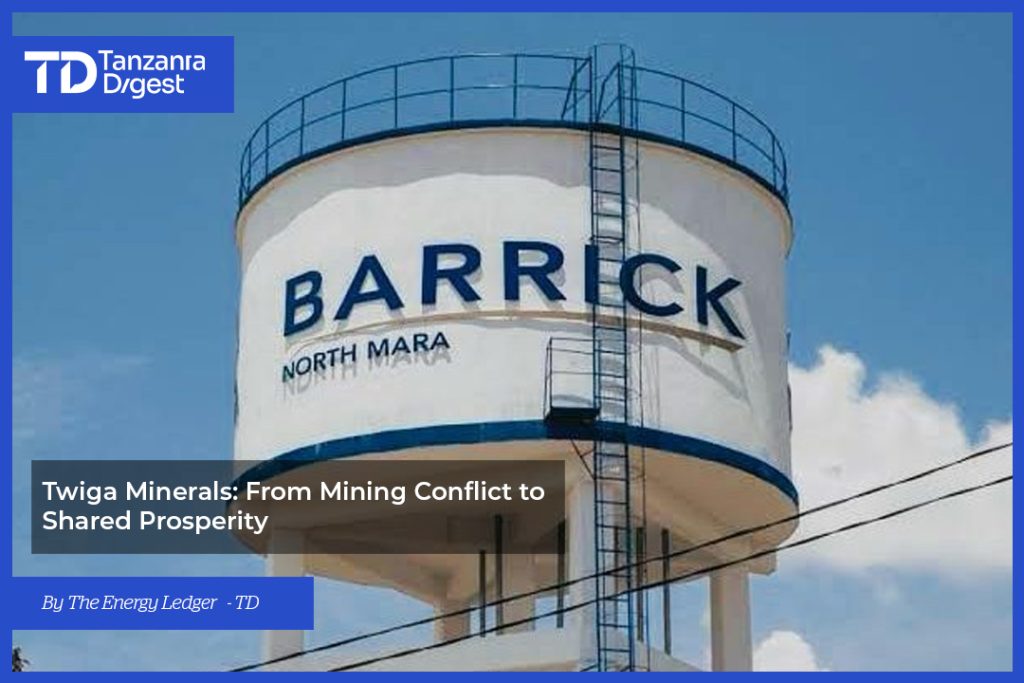

As Tanzania celebrates its 64th independence anniversary, it also reflects on the significant transformation within its mining sector over the past six decades. At the forefront of this evolution is the Twiga Minerals Corporation, a groundbreaking 50-50 partnership between the Tanzanian government and Barrick Gold Corporation. This collaboration symbolizes not just economic liberation but a commitment to shared prosperity for all Tanzanians.
The gold-rich lands of North Mara and Bulyanhulu have long been synonymous with wealth, yet historically, they have also been characterized by foreign exploitation and local discontent. The Twiga partnership emerged from a tumultuous history of disputes and represents a significant shift in this narrative. Established in 2019 and named after the giraffe, an emblem of vision and stature, Twiga marks a new era in resource governance, emphasizing equity and community participation.
A bold shift: From conflict to collaboration
The formation of Twiga was not merely a strategic business decision; it was a response to a backdrop of high-stakes conflict. Prior to 2019, Tanzania’s relationships with major mining firms were fraught with accusations of profit underreporting, ownership disputes, and a struggle for fair compensation. The government sought to reclaim what it viewed as its rightful share of mineral wealth, leading to stalled operations and increasing tensions.
In a bold and innovative move, the Tanzanian government and Barrick Gold decided to reframe the narrative. Instead of continuing the cycle of conflict, they established a joint venture designed around equitable benefit sharing. The partnership was structured so that after Barrick recoups its initial investment, all economic benefits, including government revenues and shareholder returns, are split evenly. This arrangement ensures that Tanzania is not merely a passive player but a genuine partner in both risks and rewards, holding a direct 16% stake in each mining operation.
Economic impact: A new era of prosperity
The impact of the Twiga partnership on Tanzania’s economy has been substantial and transformative. Since its inception, the partnership has injected over $4.79 billion into the national economy through various channels, including taxes, salaries, and community projects. In 2024 alone, the partnership contributed an impressive $888 million, underscoring its economic significance.
Importantly, the majority of these financial benefits remain within Tanzania. The workforce is predominantly Tanzanian, with 96% of employees hailing from the local community. This commitment to local hiring has not only created jobs but has also fortified the local economy, as over half of the workforce is sourced from surrounding communities. Furthermore, the partnership actively supports local suppliers, with 83-90% of procurement spending directed towards Tanzanian businesses, thereby fostering economic resilience.
Some key performance indicators illustrate this success:
– Total Economic Investment (2019-2025) $4.79 billion
– Local Workforce 96% Tanzanian, with 49-53% from local communities
– Local Procurement 83-90% with Tanzanian suppliers
– Community Investment (since 2019) $15.8 million
– Government Dividend (2025) 93.6 billion Tanzanian shillings
During a notable ceremony in 2025, President Samia Suluhu Hassan received record dividends from Twiga, reinforcing the partnership’s role in national prosperity. The mining sector’s contribution to Tanzania’s GDP has impressively risen from 6.8% to 10.1% in just four years, illustrating the significant economic growth fuelled by this collaboration.
Building community trust: A social license to operate
Beyond financial contributions, the Twiga partnership has focused on earning a social license to operate within the hosting communities. This involves not just compliance with regulatory frameworks but actively engaging with local communities to understand their needs and aspirations. Investments totalling over $15.8 million have been directed toward community projects that address urgent needs, including clean water, healthcare, and education.
One standout initiative is the $30 million Future Forward education program, aimed at building hundreds of classrooms across the country. This commitment to education reflects a long-term vision for community development and capacity-building, recognizing that sustainable prosperity requires investing in human capital.
In addition, the partnership has implemented clean water projects that serve tens of thousands of residents, healthcare initiatives that improve local health outcomes, and agricultural support programs that empower local farmers. These efforts not only enhance the quality of life for community members but also foster goodwill and trust between the mining operations and local populations.
A transformative model for resource governance
The Twiga Minerals Corporation stands as a testament to what can be achieved through equitable resource governance. By transforming a history of conflict into a collaborative model, it has reshaped the narrative surrounding mining in Tanzania and Africa at large. The partnership symbolizes economic liberation by giving local communities a stake in the wealth generated from their natural resources.
However, the legacy of Twiga extends beyond financial success. It highlights the importance of trust and collaboration in resource governance. The partnership demonstrates that when governments and corporations align their interests, they can create a model that not only benefits shareholders but also uplifts entire communities.
Ultimately, the Twiga partnership may lie in its ability to restore trust and illustrate the power of shared interests. The collaboration empowers local communities, offering them a voice in their resources and a stake in their future. For the partnership to be truly equitable and sustainable, ongoing innovation in governance is essential.
As the giraffe sees far, so too does the Twiga partnership offer a visionary path for mining in Tanzania and beyond. It promises a future where prosperity is shared, communities thrive, and the benefits of natural resources are equitably distributed. This partnership not only marks a significant milestone in Tanzania’s mining sector but also serves as a model for other African nations seeking to harness their resources for sustainable development and economic empowerment.
