

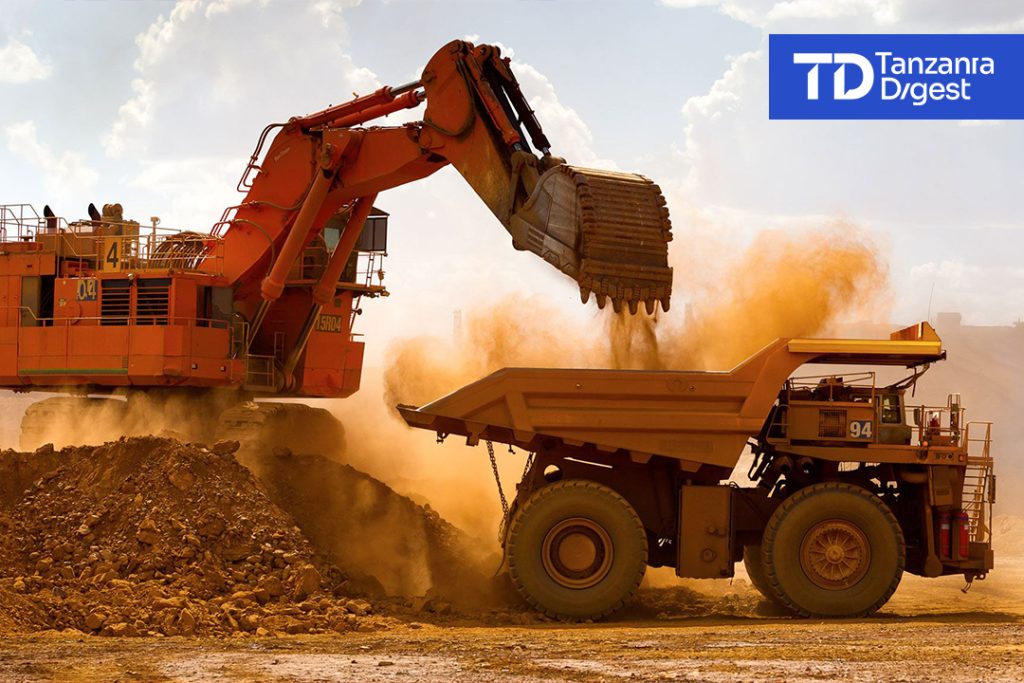

On 2 May 2024, the Tanzanian Minister of Minerals presented the budget for the Ministry of Minerals for the year 2025/2026. In his speech, he provided an overview of the mining sector’s performance for the year 2024/2025 and outlined plans for 2025/2026.
Key sector achievements
- Growth in the mining sector’s contribution to GDP
The sector’s contribution to the GDP has steadily grown from 7.3% in 2021 to 9.1% in 2023, reaching 10.1% in 2024. The sector has successfully surpassed the target of contributing 10% to the GDP, achieving this milestone one year ahead of the timeline set in the 2009 Mineral Policy and the Five-Year National Development Plan for 2021/2022–2025/2026, reaching a contribution of 10.1% in 2024.
- Growth in revenue collection
The Government revenue collection from the sector increased from TZS 623,237,296,973.40 in 2021/2022 to TZS 678,042,598,813.92 in 2022/2023 and further to TZS 753,175,680,203.96 in 2023/2024. According to the Minister, these achievements result from the Government’s robust strategies, including strengthening the management of mining activities, curbing mineral smuggling, promoting investment in mining, and establishing gemstone markets.
- 8,501 mining licenses issued
During the period from July 2024 to March 2025, the Mining Commission issued 8,501 licenses against a target of 10,294 licenses. The licenses issued were distributed as follows:
- Special Mining Licenses (SMLs): 1
- Medium-Scale Mining Licenses (MLs): 25
- Prospecting Licenses (PLs): 396
- Primary Mining Licenses (PMLs): 6,227
- Dealer Licenses (DLs): 548
- Broker Licenses (BLs): 1,290
- Refining Licenses (RFLs): 1
- Processing Licenses (PCLs): 13
- More licenses issued for strategic and critical minerals
For the period from July 2024 to March 2025, the Ministry, through the Mining Commission, has issued strategic and critical mineral licences as follows:
- 1 licence for large-scale mining;
- 58 licences for exploration;
- 275 licences for small-scale mining;
- 3 licences for medium-scale mining; and
- 3 licences for processing.
These licences cover exploration, mining, and processing of minerals such as graphite, nickel, cobalt, lithium, heavy mineral sand, and rare earth elements.
On March 3, 2025, the Mining Commission issued an SML for graphite mining to Duma Tanzgraphite Limited for the Epanko Graphite Project in Mahenge District, Morogoro Region. The implementation of this project will create employment and generate revenue for citizens and the nation at large.
- Growth in foreign exchange
In 2024, the value of mineral exports was USD 4,119.9 million compared to USD 3,551.4 million in 2023, equivalent to an increase of 16.0%. This was driven by an increase in gold sales, where the value of gold sales rose by 11.8%, reaching USD 3,419.6 million in 2024 compared to USD 3,058.9 million in 2023. Additionally, mineral sales contributed 60.0% of all non-traditional product exports.
- Surge in mineral exports
In the year 2024, a total of 9,540 mineral export permits were issued, compared to 8,809 permits issued in 2023. This significant increase in permits was driven by rising international demand for precious stones, coal, gold, and gemstones. Additionally, between July 2024 and March 2025, a total of 116 mineral import permits, valued at USD 14,813,664.38, were issued as part of efforts to regulate and oversee the domestic mineral trade.
- Value addition
The Ministry, through the Mining Commission, has continued to oversee the Mining (Mineral Value Addition) Regulations of 2020, which govern and coordinate mineral value addition activities for all types of minerals found in the country. Furthermore, during the period from July 2024 to March 2025, the Ministry, through the Mining Commission, issued a gold refining licence to the company Giant Machine and Equipment Limited – Chunya.
The Ministry has continued to attract and promote mineral value addition activities within the country by reducing the royalty rate from 6% to 4%, eliminating the 1% inspection fee, and removing the 18% Value Added Tax (VAT) on gold refined in domestic gold refineries. Through this strategy, 4.55 tonnes of gold were received and refined in local refineries during the reporting period, with the Bank of Tanzania (BoT) purchasing 2.97 tonnes of this refined gold.
- Participation of Tanzanian companies in the mining sector supply chain
During the period from July 2024 to March 2025, the total procurement of goods and services in the mining sector reached USD 2,037,145,620. Of this amount, Tanzanian companies contributed USD 1,797,989,648, accounting for 88% of total procurement. This compares to 2023, when Tanzanian companies supplied goods and services worth USD 1,478,676,709, representing 90% of total procurement. This demonstrates that although the share of Tanzanian companies’ participation declined slightly from 90% to 88%, the absolute value of their sales increased by over USD 319,312,940, reflecting significant growth in local participation within the mining sector.
Probably, 2025/2026 will witness more wins for Tanzanian companies in the sector due to the Government’s committed promotion of the mining sector.
- Tanzanians make up 97.5% of the workforce in mining companies.
As of March 2025, total employment in the mining sector stands at 19,874 jobs, comprising 19,371 Tanzanian employees (97.5%) and 503 foreign employees (2.5%).
- Rising focus on corporate social responsibility
The Ministry has continued to ensure that investors in the mining sector fulfill their social responsibilities through the implementation of the 2023 Mining License Holders’ Corporate Social Responsibility (CSR) Regulations. During the period from July 2024 to March 2025, a total of TZS 20,145,106,956.29 was allocated to various CSR projects in councils and communities surrounding mines operated by the following companies:
- Geita Gold Mining Limited
- Bulyanhulu Gold Mine Limited
- North Mara Gold Mine Limited
- Williamson Diamond Limited
- Shanta Mining Company Limited
- Dangote Cement Limited
- Sotta Minerals Corporation Limited
- Duma Tanzgraphite
- Zem Development Limited.
Local content and environmental laws compliance crisis
Environmental audits
During the period from July 2024 to March 2025, seven (7) large-scale mines were audited. These mines include:
- Dangote Cement Co. Ltd
- Williamson Diamond Ltd
- El-Hillal Minerals
- North Mara Gold Mine
- Geita Gold Mine
- STAMIGOLD
- Bulyanhulu Gold Mine
The audits revealed several compliance gaps, such as:
- Absence of Mine Closure Plans and Mine Plans,
- Lack of designated waste rock dump sites,
- Damaged water quality monitoring boreholes due to encroachment, and
- Expansion of tailings ponds beyond permitted limits. The mines were directed to rectify these deficiencies and have since complied.
Gaps in local content compliance
During the period from July 2024 to March 2025, the Mining Commission conducted 10 compliance audits on the implementation of Tanzanian local content requirements in mining operations. Audit reports for the following companies were finalized:
- Williamson Diamonds Limited (Kishapu, Shinyanga)
- Capital Quarry (Dodoma)
- Cata Mining Co. Ltd (Musoma, Mara)
- Zem Development Tanzania Limited (Shinyanga)
- Mwanza Precious Metals Refinery.
Major findings: (a) Non-compliance with certain provisions of the 2018 Tanzanian Local Content Regulations (and its amendments) was identified; and (b) Penalties and corrective education on the regulations were imposed.
Gaps in submitted applications for procurement approvals
Regarding applications for procurement approvals from various License Holders and Contractors, a total of 787 applications were received and reviewed. Out of these, 764 applications were approved, while 23 were rejected for failing to meet the requirements of the 2018 Tanzanian Local Content Regulations and its amendments.
Conclusion
With the Government actively stepping up regulatory enforcement in the mining sector, companies operating in Tanzania must urgently reassess and strengthen their compliance strategies. This heightened scrutiny, evidenced by increased license audits, default notices, and revocations, signals a firm commitment to ensuring adherence to legal and operational standards.
To navigate this evolving regulatory landscape, mining companies have two critical pathways:
- Engaging professional advisory services – Legal, environmental, and regulatory experts can help companies interpret complex compliance obligations, implement robust internal systems, and respond effectively to regulatory queries or investigations.
- Investing in internal capacity building – Strengthening internal teams through targeted training, recruitment of compliance specialists, and development of clear governance structures can significantly improve a company’s ability to remain compliant in the long term.
Ultimately, non-compliance is no longer just a risk, it is a real threat to business continuity. Proactive compliance is now a strategic imperative for sustainability and investor confidence in Tanzania’s mining sector.
Read more analysis by Amiri Sharifu
